
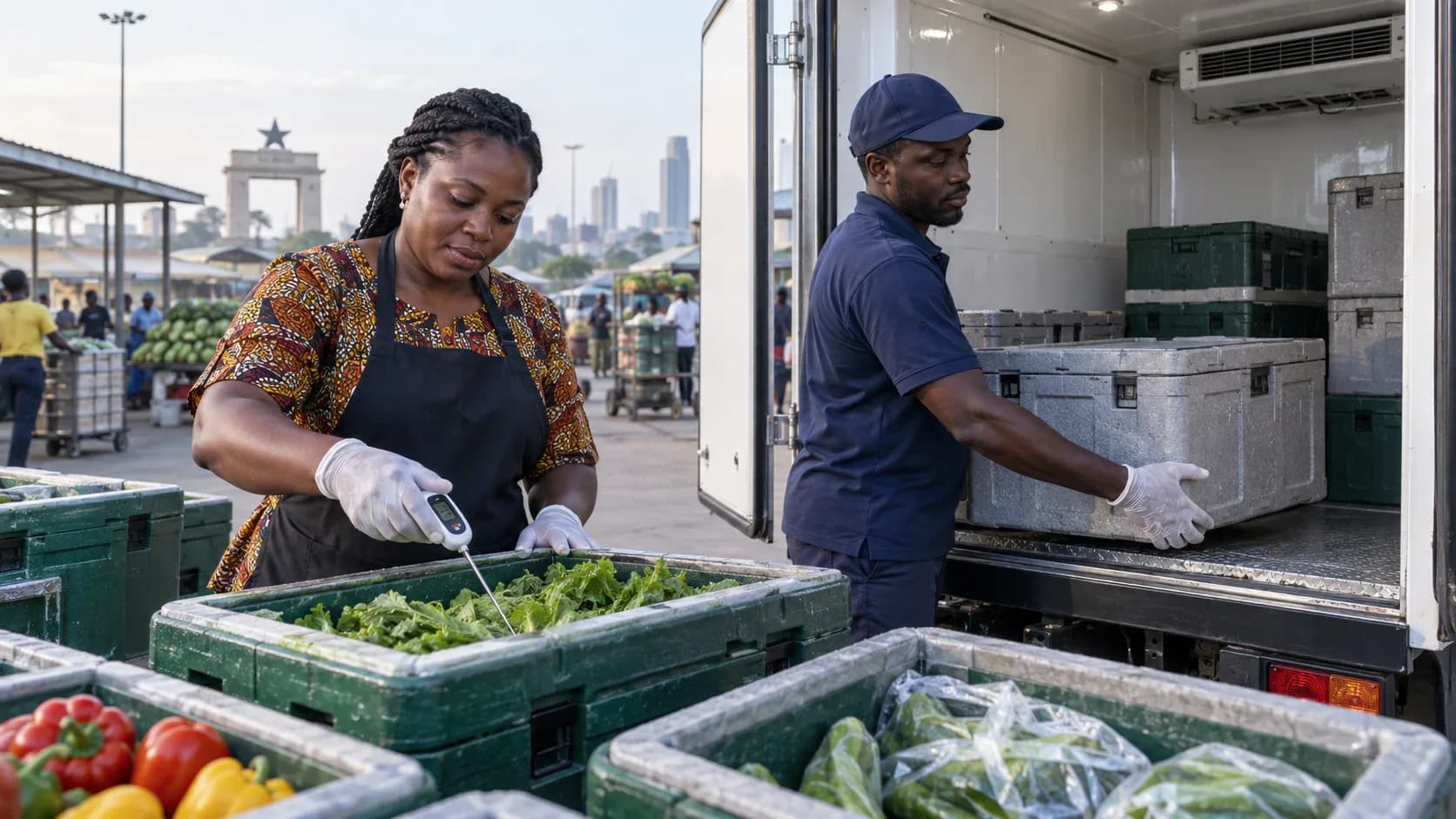
Temperature-sensitive cargo needs defined limits, suitable equipment and quick handover.
A practical introduction for farms, food sellers, restaurants and processors moving temperature-sensitive products in Ghana.
Classify the product first
Fresh vegetables, chilled dairy, frozen meat and prepared food do not share one universal temperature. Follow the producer's instructions and applicable food-safety requirements. Separate products that can contaminate one another or require different conditions.
Tell CargoMov exactly what is being moved, the quantity, packaging, required condition and journey length. Selecting a generic vehicle without these facts can break the cold chain before delivery begins.
Choose suitable equipment
A refrigerated vehicle must be capable of maintaining the required environment; it should not be expected to freeze warm products during transit. Insulated boxes and ice packs may suit some short, validated movements but not every food or route.
Confirm the vehicle type and handling plan with the selected driver. CargoMov coordinates the marketplace booking, but the shipper must specify and verify the product's cold-chain needs.
Control loading and journey time
Prepare, pack and pre-cool cargo before the vehicle arrives. Keep doors open only as long as necessary and load in the delivery order. Avoid placing food directly on dirty surfaces or mixing it with chemicals and unrelated cargo.
Use accurate pickup and drop-off locations and ensure the receiver is ready. Traffic risk should be considered in the schedule, especially for longer urban or intercity routes.
Document the handover
Where required, record temperature at dispatch and receipt using suitable calibrated equipment. Note times, seal condition, package damage and any deviation. A recipient should reject or quarantine questionable products according to the organisation's food-safety procedure.
Keep these records with the CargoMov booking and delivery evidence. A reliable cold-chain process is built from repeatable controls, not from assuming that a fast trip is automatically a safe one.
Topics covered
Frequently asked questions
Does every fresh-food delivery need a refrigerated truck?
Not always. The correct setup depends on the product, required temperature, packaging, journey and food-safety rules.
Can a refrigerated truck cool warm cargo?
Transport refrigeration is generally intended to maintain prepared cargo conditions. Pre-cool products as required before loading.
What should I include in the CargoMov request?
State the product, quantity, packaging, required temperature or condition, loading readiness, route and receiving window.
Ready to plan your delivery?
Use CargoMov to plan a cargo booking, review available pricing options and follow the delivery. Agent access and Driver access are subject to the relevant account approval.