
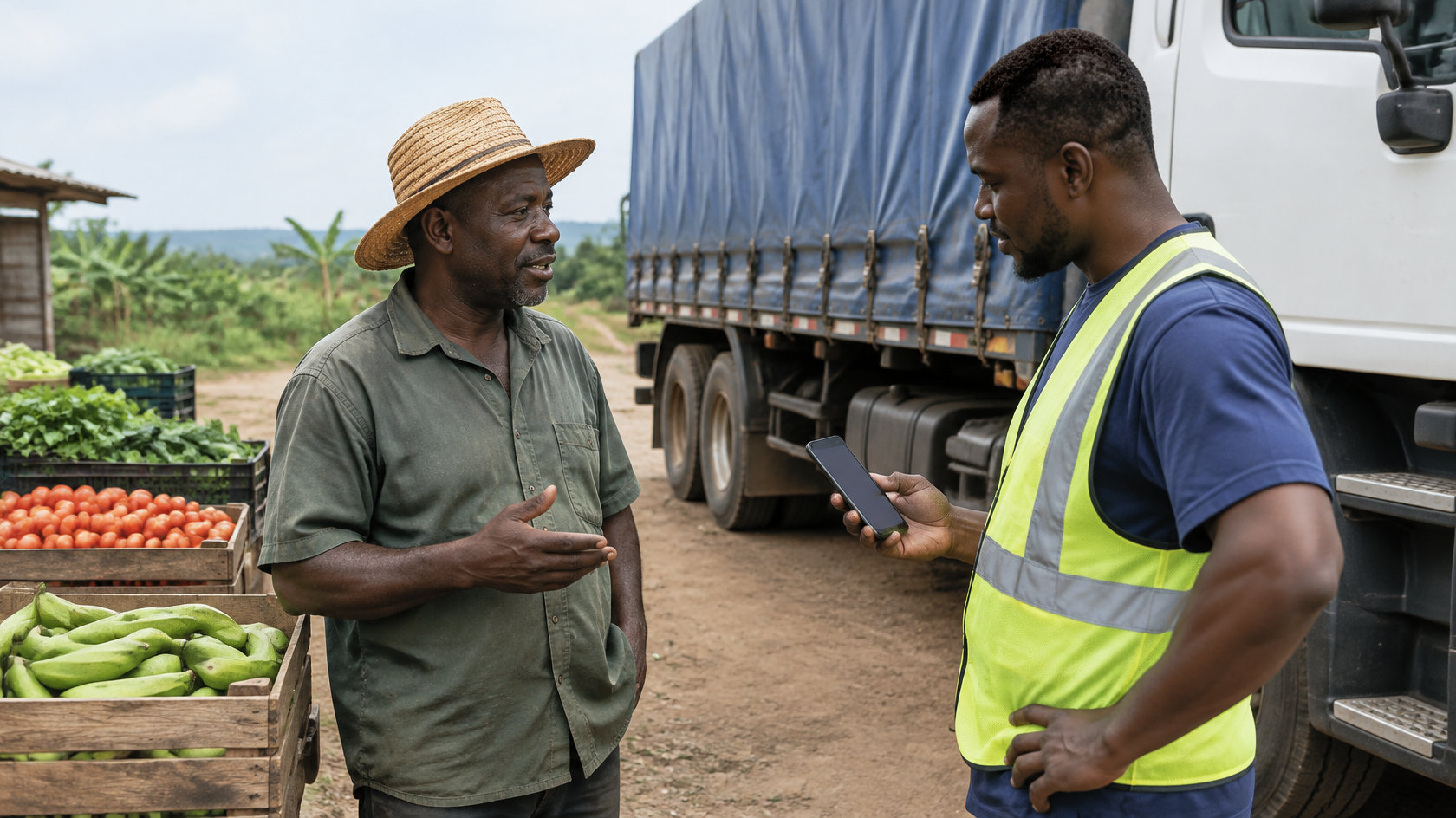
Dry produce needs clean, stable loading and protection suited to the crop.
Practical handling steps for dry, non-refrigerated produce loads, with a reminder to confirm specialist requirements for perishable goods.
Not every farm-goods trip needs refrigeration, but every load needs handling that suits the product. For dry, non-refrigerated produce, focus on clean packaging, stable stacking, protection from rain and a receiver who is ready to unload.
Key takeaways
- Sort and package the goods before the vehicle arrives.
- Keep loads clean, stable and protected from rain without trapping damaging moisture.
- Confirm separate temperature-controlled requirements for chilled or highly perishable goods.
Start with the crop and its requirements
The right handling method depends on the crop, maturity, packaging and trip length. Ask the buyer, supplier or qualified produce-handling adviser what protection is appropriate. Do not assume that one cover, crate or temperature works for every product.
This guide focuses on dry, non-refrigerated loads. Fresh-cut, chilled, frozen or otherwise temperature-sensitive goods need a separate plan with suitable equipment and product-specific temperature controls; a quick trip alone does not establish a safe cold chain.
Load cleanly and prevent crushing
Use clean packaging, remove damaged goods when required, and keep sacks or crates away from dirt, standing water, chemicals and unrelated cargo. Stack on a stable base and distribute weight so lower packages are not crushed.
Secure the load against movement while allowing any ventilation required by the product. Protect goods from rain and direct exposure using an arrangement suitable for the crop; a tightly sealed cover can create problems if the goods require airflow.
Reduce delays at both ends
Prepare the load and confirm the recipient before the vehicle arrives. Accurate addresses, an available phone contact, a receiving window and unloading help can reduce time spent waiting with the cargo on board.
At delivery, check package count and visible condition with the recipient. Record any issue promptly and follow the buyer's or food-safety manager's procedure for questionable goods rather than making assumptions about whether they remain saleable.
Frequently asked questions
### Do all farm goods need refrigerated transport?
No. Requirements depend on the product, condition, packaging and route. Confirm suitable handling with the supplier or a qualified specialist.
### Can I cover produce with a tarpaulin?
Only if the protection suits the crop and does not create harmful heat or moisture conditions. Confirm the handling plan before loading.
### What if the produce is chilled or frozen?
Use a separate, verified cold-chain plan with suitable equipment, required temperature controls and documented handover. Do not treat a standard vehicle as refrigerated.
Topics covered
Ready to plan your delivery?
Post your cargo job, compare driver offers, and track delivery across Ghana.