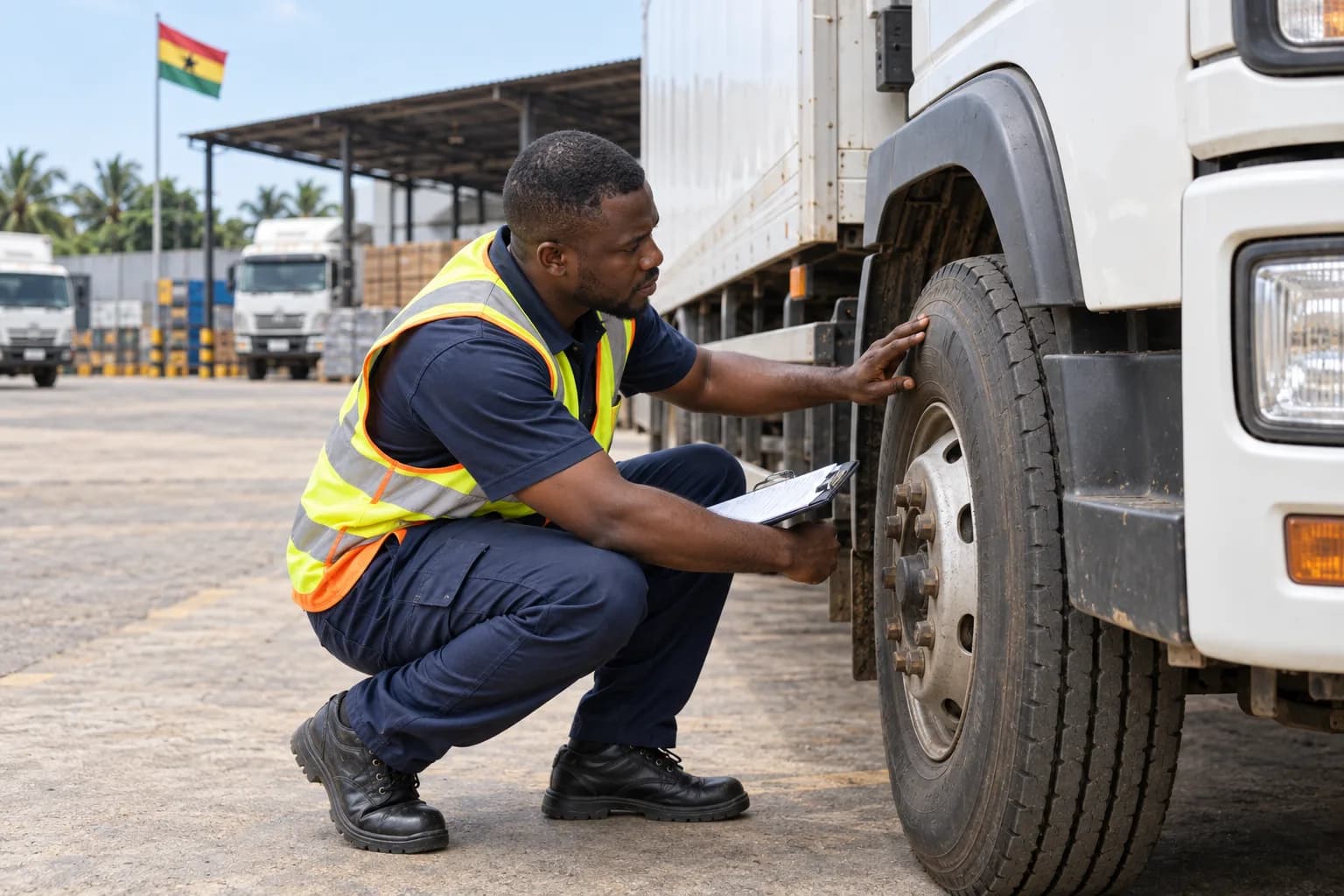
AI-generated editorial illustration; not a photograph of an actual customer, employee or delivery.
A daily truck inspection checklist in Ghana helps drivers identify defects before cargo is on board.
Start the check before accepting the load
A daily truck inspection checklist in Ghana helps drivers identify defects before cargo is on board. Park safely, secure the vehicle and follow the manufacturer's inspection procedure. This guide is a planning aid, not a substitute for servicing, statutory checks or a qualified mechanic.
Check visible tyre condition, wheels, lights, mirrors, windscreen and obvious leaks. Use appropriate tools and manufacturer guidance for measurements. Do not crawl under an unsecured vehicle or attempt repairs in an unsafe loading area.
Check the cargo area and equipment
Inspect the body, doors, tail lift if fitted and the equipment needed for the planned load. Look for damaged restraints, sharp projections, water ingress and anything that could contaminate the cargo. Check that required safety equipment is present and serviceable.
Confirm the load is suitable for the vehicle's capacity and configuration. An inspection does not make an unsuitable vehicle suitable. If loading equipment, packaging or site access is inadequate, resolve the issue before movement.
Record defects and act on them
Use a simple log with date, vehicle reference, checks completed, defect found, action taken and release decision. Report safety-critical problems to the responsible operator and do not drive until the vehicle is safe and authorised for use.
After unloading, record new damage or issues that need attention before the next job. Keeping a consistent log is more useful than ticking every box automatically. Ask a qualified technician when the meaning of a warning or defect is uncertain.
Use the check to make better job decisions
Review the cargo description and route before sending an offer. Allow realistic time for inspection, loading and breaks; do not compensate for a late start by unsafe driving. Register as a CargoMov driver and provide accurate vehicle information.
Approval on a platform does not replace your responsibility to maintain the vehicle and follow applicable transport requirements. Keep your account and documents current and report operational problems promptly.
Topics covered
Frequently asked questions
What information should I prepare first?
Check visible tyre condition, wheels, lights, mirrors, windscreen and obvious leaks. Use appropriate tools and manufacturer guidance for measurements. Do not crawl under an unsecured vehicle or attempt repairs in an unsafe loading area.
How do I take the next step?
Use CargoMov driver registration and confirm the current approval requirements.
Put your truck and skills to work
Start your CargoMov driver application. Once the relevant checks are approved, review suitable jobs and make offers based on your own operating costs.